
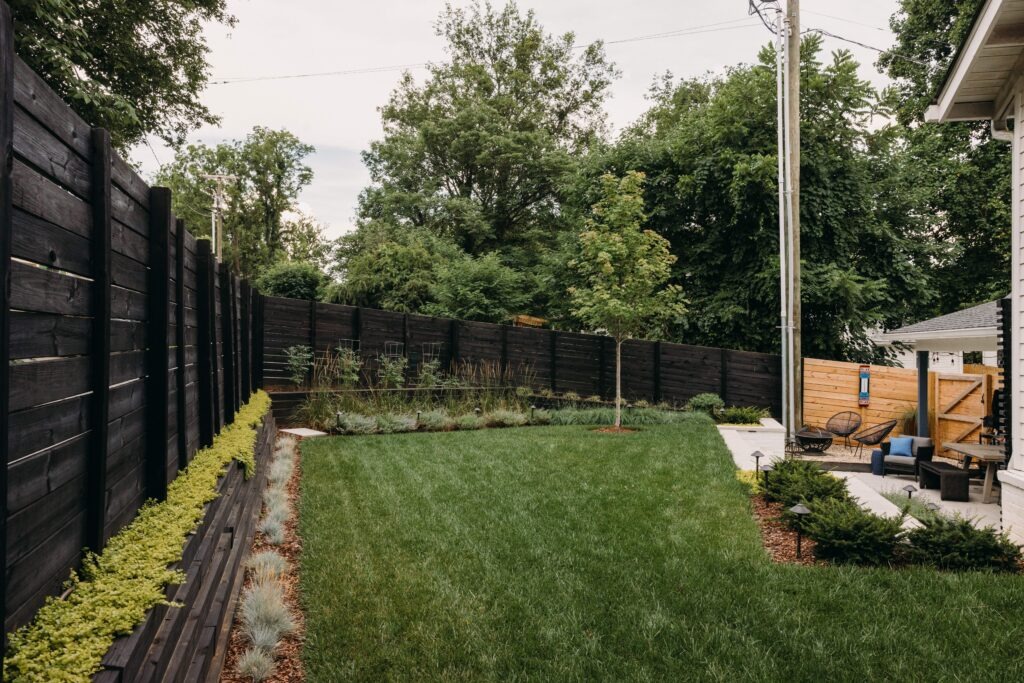
 Do you know what type of grass you have on your property? Or that different types of grass require somewhat different care, especially during the intense summer heat?
Three of the most common grasses found in Middle Tennessee yards are tall fescue, bermudagrass, and zoysiagrass, each of which performs differently throughout the year. But knowing which type you have is only part of effective lawn care. You should also take our region’s climate and environmental challenges into consideration. Things like the sweltering summer heat, periods of limited rainfall, and the dense, clay-rich soil that absorbs water slowly.
If your lawn is beginning to brown or thin out, or it’s developing dry patches, it doesn’t necessarily need more water—it needs the right kind of care.
Our Climate Puts Lawn Care to the Test
At Landscape Solutions, we have years of experience helping homeowners across Middle Tennessee maintain beautiful, healthy lawns. And if there’s one piece of advice we want to offer, it’s that exceptional lawns are not the result of excessive watering. Lush green lawns come from understanding how soil, sunlight, grading, drainage, and irrigation interact, and managing or correcting those conditions as needed.
In addition, your lawn needs the right fertilization program, properly timed aeration to relieve soil compaction, and, where excessive thatch has accumulated, dethatching to help water, air, and nutrients reach the soil.
As a full-service landscape design-build and property care firm, we apply our knowledge of Middle Tennessee’s lawn and plant growing conditions as part of a complete program, calibrating our approach as weather and seasonal needs change.
While we are experts in the design, construction, and care for your outdoor spaces, most homeowners prefer to manage their own watering, either through an integrated irrigation system or the good old-fashioned sprinkler. If you’re wondering, “how often should I water my lawn?” approximately one inch per week, including rainfall, is a good starting point for many established lawns during the dry summer months. This is generally best applied in one or two deep watering sessions rather than through frequent, shallow irrigation. However, the appropriate amount and frequency of watering depend partly on your type of grass and whether it is actively growing or entering dormancy.
Tall fescue is a cool-season grass that performs best during spring and fall. When actively growing, it generally requires 1 to 1 and 1/2 inches of water per week, applied deeply enough to moisten approximately 4 to 6 inches of soil. During Nashville’s hottest months, however, tall fescue may slow its growth or become semi-dormant. Homeowners who accept some temporary summer browning can irrigate primarily during extended drought rather than trying to keep it continuously green.
Bermudagrass thrives in heat and full sun. During favorable late-spring and summer growing conditions, it can receive up to approximately one inch per week, divided into two half-inch applications. During especially hot weather, this amount can be divided into three applications of approximately one-third inch to help prevent wilting.
Zoysiagrass also performs well in the heat and has relatively good drought tolerance. Instead of watering it automatically according to a rigid schedule, look for signs of drought stress and then irrigate deeply. An established zoysiagrass lawn may need less water than actively growing fescue, depending on its variety, soil, shade, root depth, and any recent rainfall.
Is It Ok to Water Grass Every Day in Summer?
The answer to this question may surprise you: an established lawn should not ordinarily be watered every day (good news for both your schedule and our natural resources).
Daily watering can encourage shallow rooting and keep grass blades and the soil surface needlessly wet. This, in turn, can contribute to fungal disease and weed growth. It also wastes water through evaporation and runoff and, in poorly drained areas, can leave the soil so saturated that grass roots cannot access the oxygen they need.
The goal with Nashville lawn care is to encourage roots to grow deeper into the soil, where moisture remains available longer. Deep, less frequent watering supports this process more effectively than a light daily sprinkle. After watering, allow the upper soil to begin drying and watch the grass for signs that it needs water again rather than automatically repeating the process the next day.
Newly seeded lawns and freshly installed sod are important exceptions. Because their developing roots cannot yet draw moisture from deeper soil, they may require light, frequent watering during establishment. That schedule should be reduced gradually as the roots become stronger and extend farther into the soil.
When Is the Best Time to Water Your Lawn?
Early morning, ideally between 5:00 A.M and 7:00 A.M., is the best time to water your lawn. Cooler temperatures and calmer winds at that hour mean less water is lost to evaporation before it reaches the roots. Morning watering also gives grass blades time to dry as the sun rises, limiting the prolonged leaf wetness that invites fungal disease. Midday watering wastes water to evaporation, and late-night watering leaves foliage wet for hours, so both are best avoided.
How Often Should You Water Lawn Areas With Clay Soil?
Much of Middle Tennessee has dense, clay-rich soil that absorbs water slowly, particularly where the ground is compacted or sloped. Both the amount of water applied and the method used are important. Cycle-and-soak irrigation can help: water for a short interval, pause to allow moisture to penetrate, and then repeat until the intended amount has been applied. This reduces pooling and runoff while helping water reach the root zone.
Watch for a bluish-green or dull color, folded or rolled leaves, and footprints that remain visible, which are all signs of drought stress. Use a rain gauge to track rainfall and identical shallow containers or irrigation catch cups to check how evenly your sprinklers distribute water. Dry patches confined to certain areas may signal uneven coverage, compacted soil, poor drainage, pests, or disease rather than an entire lawn that needs more water.
Healthy Lawns Are Part of a Complete Property Care Plan
Even a perfectly executed watering schedule can’t compensate for improper mowing, compacted soil, incorrect fertilization, or a leaky, unevenly covering irrigation system. These conditions are interconnected, and diagnosing them takes a trained eye, which is exactly the kind of work most busy Nashville homeowners don’t have time for. That’s where thorough and thoughtful lawn care that Nashville property owners can rely on makes the difference between a lawn that’s barely surviving and one that’s thriving.
At Landscape Solutions, we bring lawn care, irrigation, horticultural expertise, and seasonal property care together under one team, so your entire outdoor environment is understood and maintained as a whole. Our full-service approach to protecting and enhancing your outdoor spaces, along with our passion for excellence, means you can enjoy a luxurious, resort-style retreat at home, without all the heavy lifting and extra hours of work.
Ready for a comprehensive lawn care program that keeps your property healthy, lush, and beautifully maintained? Schedule a consultation with the experts at Landscape Solutions and enjoy a pristine, resort-style outdoor retreat without managing every detail yourself.