
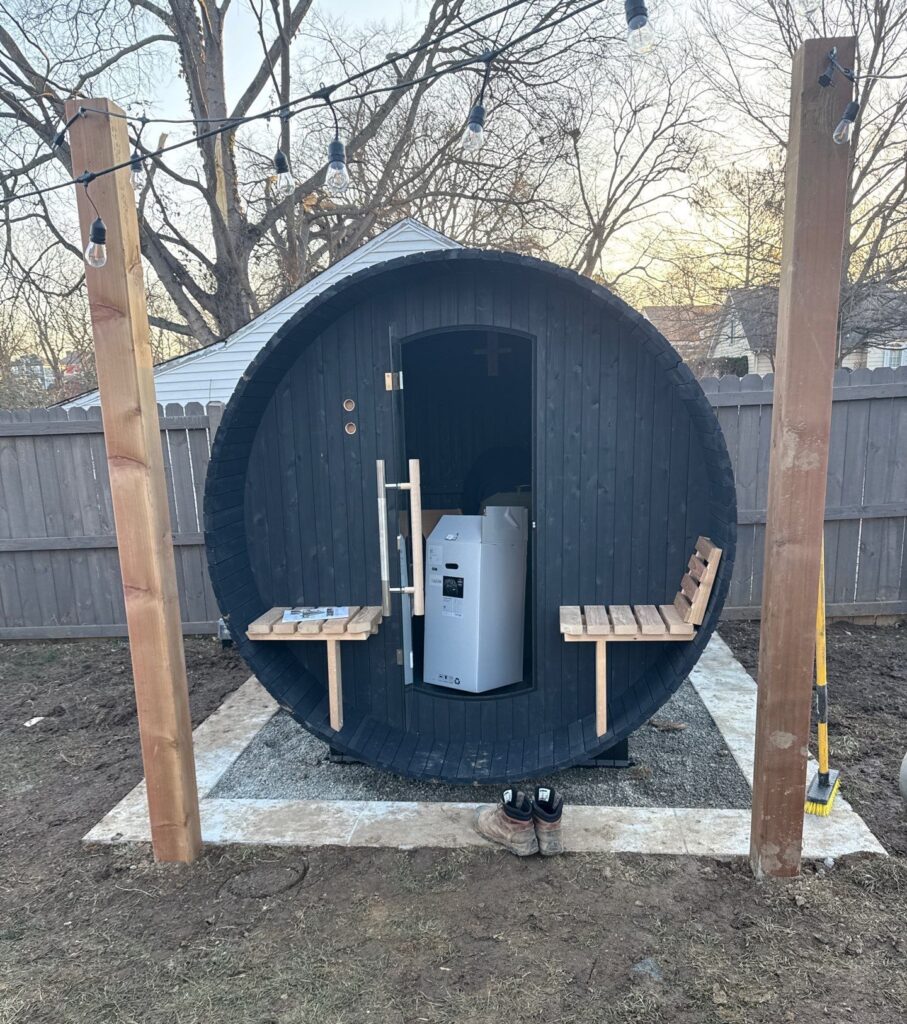
 At-home wellness features like saunas and spas became a defining trend in Tennessee in 2020 that is showing no signs of slowing down. And why should it? Given the choice between a public recreation center sauna, with all the accompanying awkwardness of strangers perspiring massively in close proximity, and a crowded spa where true relaxation remains perpetually out of reach, who wouldn’t rather have a custom-tailored setup in their own backyard oasis?
At Landscape Solutions, we’ve helped homeowners across Middle Tennessee create spectacular wellness spaces on their properties. We understand which materials perform best in our climate and what aligns most beautifully with a home’s current architecture and aesthetic. When a spa and sauna area blends cohesively with the rest of a home’s landscaping, the effect is breathtaking.
For those wondering what type of wood is used in a sauna, we prefer cedar. But while the species of wood our clients select is important, it’s only one part of the overall material equation.
Why Tennessee’s Climate Factors Into Sauna Material Selection
Tennessee’s climate is unique, and not always in the best ways. Estate owners in Nashville, Brentwood, Franklin, East Nashville, and beyond know firsthand that summers here can push heat indices above 105°F while delivering humidity levels that rival the Gulf Coast. That combination creates a surprisingly hostile environment for outdoor structures. When selecting sauna materials, what performs flawlessly in the arid climates of the American Southwest or even Scandinavia can warp, crack, or degrade significantly faster here in Middle Tennessee.
Summers here bring intense UV exposure and sustained heat that breaks down surface finishes. Late summer and fall deliver heavy rainfall events that can dump two to three inches in a matter of hours. Winter brings freeze-thaw cycles that drive water into any crack or joint, expanding it with a remarkably destructive force. Every material placed in a Tennessee sauna or spa environment must be evaluated against this full spectrum of stresses, not just its behavior under ideal conditions.
This means property owners should prioritize materials that manage moisture absorption, resist surface deterioration from UV, and accommodate the inevitable expansion and contraction that come with Tennessee’s seasonal temperature swings. A wood or composite that looks stunning in year one but requires aggressive maintenance by year three is the wrong choice, regardless of how premium the price tag.
Choosing Materials by Performance Zone
One of the most important distinctions in sauna and spa design is that not every surface faces the same challenges. At Landscape Solutions, we approach each project by thinking through four distinct performance zones, each requiring a different sauna material strategy.
The Interior Heat Zone includes any surface directly exposed to high heat and steam, such as walls, ceilings, and flooring within the sauna chamber. Here, species selection is everything. Cedar remains the gold standard for a reason: its natural oils repel moisture, it stays dimensionally stable under heat cycling, and it releases a scent many clients find deeply relaxing. Hemlock is an outstanding choice for those who want a lighter, more neutral aesthetic. Aspen and alder are increasingly popular for their tight grain structure, low resin content, and ability to stay cool to the touch even when the room temperature climbs.
The number one rule in this zone: no resinous woods. Pine and fir, no matter how beautiful, will seep sap at high temperatures and create a sticky, unpleasant, and potentially unsafe surface.
Touch Zones, such as benches, backrests, and armrests, come with their own considerations because no one wants the unexpected shock of making contact with steaming hot planks of wood. Smoothness and splinter resistance are also imperative. A lesser-known fact most homeowners don’t ask about is that bench boards should be installed with gaps of roughly 5-10mm between them. This isn’t just for aesthetic purposes; it’s a functional requirement that allows the wood to breathe, dry out between uses, and maintain its surface integrity over time.
The Weather Zone covers all exterior cladding and exposed structural elements. This is where thermally modified wood, fiber cement, and premium composite materials have changed the game. Whatever faces Tennessee’s sun, rain, and temperature extremes needs to handle them without warping or requiring constant refinishing.
Finally, the Water Zone, which includes cold plunge surrounds, outdoor showers, and spa decking, demands materials that prioritize slip resistance, active drainage, and reliable water management. Porcelain pavers are one of our favorite choices in this zone because they’re virtually impervious to moisture intrusion and available in finishes that complement virtually any architectural style from traditional Nashville estate homes to more contemporary College Grove properties.
Thermally Modified Wood and Other Modern Material Innovations
If you haven’t heard the term “thermally modified wood” yet, you will. It represents one of the most significant advances in sauna building materials in recent years, and it’s an option we’re specifying with increasing frequency on projects across Brentwood, Franklin, and throughout Middle Tennessee.
Thermally modified wood is natural timber that has been heat-treated at temperatures between 350°F and 430°F in a low-oxygen environment. That process changes the wood’s cellular structure, dramatically reducing its ability to absorb and release moisture. The result is a material with improved dimensional stability, significantly enhanced resistance to decay, and a beautiful, warm tone that tends to deepen rather than fade with UV exposure. For Tennessee’s climate specifically, these characteristics address almost every weakness that conventional wood brings to outdoor wellness environments.
Beyond wood, the portfolio of premium spa materials and sauna construction has expanded considerably. Large-format porcelain pavers (24″x48″ or larger, for example) around spa areas create a seamless, resort-quality aesthetic while essentially eliminating the grout-line maintenance issues that plague smaller tiles. High-performance composite decking products now offer 25 to 30-year warranties against fading, staining, and structural integrity loss. Advanced waterproofing membrane systems, applied beneath surface materials, provide an invisible but critical layer of protection that extends the life of the entire installation.
The Most Important Sauna Material Is the One You Never See
Every premium sauna and spa project we complete begins below the surface. The most important performance factor in any Tennessee wellness space installation isn’t the wood species, the stone selection, or the finish quality. It’s what’s underground.
Tennessee’s heavy clay soils are notoriously resistant to drainage. Without proper site grading, subsurface drainage systems, and strategic base preparation, even the finest materials will fail prematurely. Standing water beneath a spa deck creates hydrostatic pressure, promotes mold and mildew growth, and accelerates wood decay from the underside up. A little-known fact that surprises many clients is that some of the most common causes of sauna material failures in our region have nothing to do with the materials themselves. They trace directly back to inadequate ventilation planning and water accumulation beneath the structure.
Our team evaluates the full drainage and grading picture at every project site before a single material is specified. That’s part of what it means to be a full-service design-build firm, and it’s a major reason why projects by Landscape Solutions continue to perform beautifully years after completion.
Building for Long-Term Performance
Creating a wellness space that genuinely performs over the long term in Middle Tennessee requires a solid understanding of how heat, water, and weather interact across all environmental zones. Choosing materials matched to those specific stresses and building the infrastructure beneath them that allows them to perform as intended is vital.
When all of those elements come together, what you end up with is something exceptional: a backyard retreat that remains as comfortable, durable, and visually stunning a decade from now as it is on your opening day festivities.
Make your dream home wellness zone a reality with Landscape Solutions. Schedule a consultation today.