
 If you’ve seen someone use a chainsaw or loppers to trim the top half of a crape myrtle, you’ve witnessed what horticulturists call a far grimmer act. While often well-intentioned by homeowners, lawn crews, or landscapers who may not know better, it turns a beautiful canopy of blossoms and green leaves into a disfigured, lifeless stalk.
At Landscape Solutions, we’ve been designing, building, and caring for exceptional outdoor spaces across Nashville and Middle Tennessee since 2009. Our team of designers, builders, craftsmen, and horticulturists brings a deep commitment to ecological stewardship and expertise to every project we helm, and crape myrtles are the perfect example of where professional knowledge makes all the difference.
What Is the Controversy With Crape Myrtles?
First, a quick note: both “crape myrtle” and “crepe myrtle” are correct. The name traces to the plant’s crinkled, paper-like petals that resemble crepe paper. In the American South, “crape” is the traditional spelling, and the one we’ll use here.
Whichever way you spell them, crape myrtle trees have become controversial over the years—more accurately, people have developed different opinions on how to handle these trees, mainly in residential settings (but also municipalities). There are several overlapping debates on this issue, and understanding them is the first step toward being a more informed steward of your property.
The most visible issue is improper pruning, a practice so widespread and damaging that it has earned its own name in horticultural circles: crape murder.
Another issue is Crape Myrtle Bark Scale, an invasive pest spreading quickly in our region. Additionally, advocates for ecological landscapes debate the role of non-native plants locally. All these issues deserve focused, careful management.
Why Do People Cut Crape Myrtles Back So Far?
Walk through almost any established neighborhood in Nashville, and you’ll see at least a few crape myrtles cut down to thick, blunt stubs, with the upper canopy entirely removed and strange knobby growths forming at the cuts. It’s surprisingly common. We’ve heard several reasons for this action, but most of the time, the practice comes from a basic misunderstanding of the care this tree species requires.
The most widely cited belief is that severe cutting produces more or bigger blooms. There’s a kernel of truth here: hard pruning can stimulate new growth that blooms, but those new branches are structurally weak, often unable to hold the weight of their own flowers. The result is drooping, stressed growth rather than the lush, graceful canopy these trees are capable of producing.
Size control is another common reason. Often, homeowners choose large-growing varieties like Natchez and place them in spaces that can’t accommodate their full, natural height. Rather than select the appropriate variety from the start, the solution turns into an annual hacking-back – a cycle with no good outcome.
And then there’s historical instruction. Severe topping has been passed down through generations of lawn crews as a quick, recurring, inexpensive service. It can look like proactive care and can keep clients on a seasonal schedule, but our horticulture experts warn that it is not proper care. It is a practice that shortens the tree’s lifespan, invites disease, and diminishes the natural beauty of your landscape over time.
Nashville Crape Myrtle Trees: What’s Really at Stake?
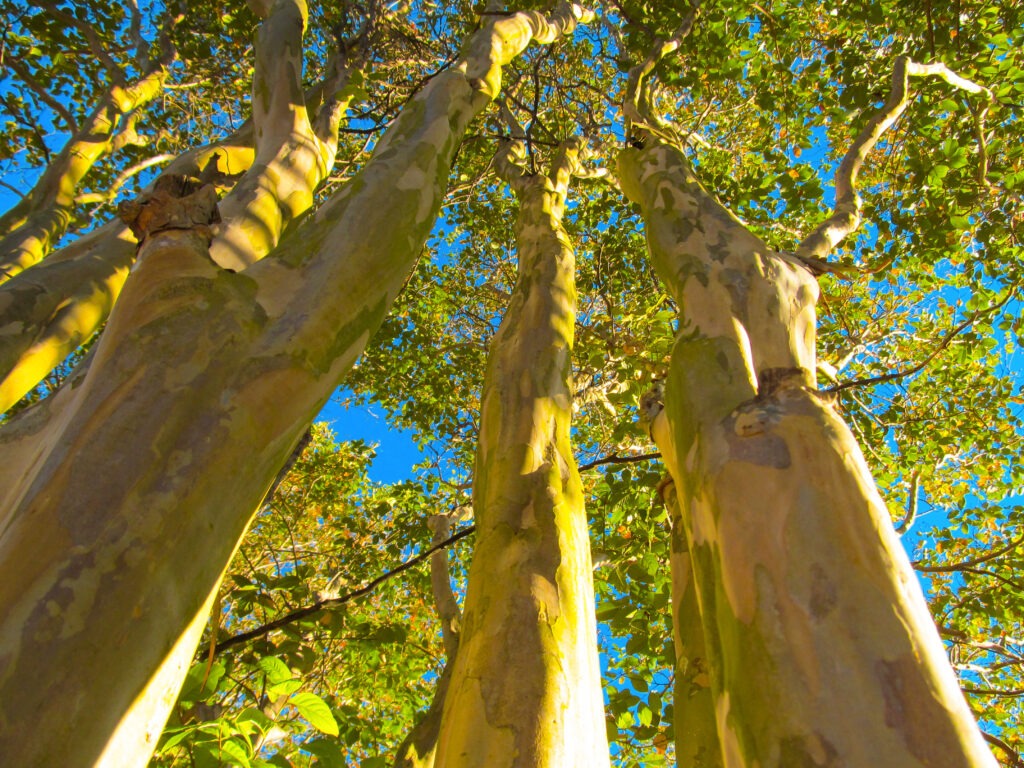
Nashville crape myrtle trees are among the most iconic plantings in our region. Drive through Belle Meade, Green Hills, or Brentwood in late summer, and you’ll see their multi-week bloom period, elegant peeling bark, and fiery fall color make them a landscape anchor that few other trees can rival. When properly cared for, they live for decades and grow more beautiful with age.
But these trees face threats beyond pruning. Crape Myrtle Bark Scale, an invasive Asian insect first reported in Tennessee in 2013, has spread across Middle Tennessee. The pest infests bark, producing black sooty mold that coats trees, plantings, and outdoor furniture. Managing an infestation requires systemic insecticides—a process with its own environmental considerations that must be handled by professionals. To date, this is the only effective measure to eliminate infestations and preserve the tree’s health.
Middle Tennessee’s winters present another variable. In colder years, crape myrtles can die back to their roots entirely, emerging in spring as a shrubby clump rather than the trees they once were. Knowing how to assess winter damage, encourage healthy regrowth, and decide when intervention is needed is the kind of judgment call that comes from horticultural experience, not guesswork or lore.
What Are the Mistakes to Avoid When Trimming Crape Myrtles?
So, what should you avoid when trimming crape myrtle trees? The list is longer than you might realize. Steer clear of:
- Topping the tree. Removing the upper canopy down to thick stubs is the defining act of “crape murder.” Those large pruning wounds become entry points for wood-decay fungi, which can compromise the tree’s structural integrity and dramatically shorten its lifespan.
- Cutting branches thicker than a pencil. Proper pruning should remove thin, twiggy growth; inward-growing branches; and suckers at the base. Anything heavier than pencil-width should stay, or you’re reshaping the tree’s architecture in ways it can’t accommodate.
- Pruning at the wrong time. Late winter to early spring is the optimal pruning window. Pruning too late in the season can interrupt the tree’s bloom cycle or leave it vulnerable heading into winter.
- Ignoring the suckers. Crape myrtles regularly produce new shoots from the base of the trunk. Left unmanaged, these suckers sap energy from the main tree and create a cluttered, multi-trunk appearance that undermines the tree’s natural elegance.
- Planting the wrong variety. Placing a tree that will grow to 30 feet in a space that requires 10 feet creates a permanent maintenance problem. Matching variety to location from the start is always the right move, and one of our team’s specialties.
How to Properly Care for Crape Myrtles
Understanding how to care for crape myrtles requires thinking about the full growing season, not just the pruning moment. Here’s the framework our horticulturists follow for properties across Middle Tennessee:
- Siting and planting. Crape myrtles need at least six (6) hours of direct sun daily. Plant them where they’ll receive full sun exposure and where water drains freely. Ensure the root flare is visible at the soil line. Planting too deeply is one of the most common and most damaging mistakes made at installation.
- Watering through root establishment. New trees need consistent, deep watering throughout their first year, particularly during Tennessee’s hot June and July months. Once established, crape myrtles are quite drought-tolerant, but they’ll reward deep watering during dry spells with more vigorous bloom and healthier root development.
- Fertilizing strategically. Apply a balanced, slow-release fertilizer in early spring to support the season ahead. Avoid fertilizing after midsummer because late-season feeding encourages tender new growth that won’t harden off before winter, leaving the tree more vulnerable to cold damage.
- Pruning with intention. Follow the “Three Ds”: remove “dead,” “diseased,” or “damaged” branches. Thin crossing or rubbing branches to improve air circulation and light penetration. Remove suckers at the base. Maintain the tree’s natural, graceful shape. Nothing more.
- Monitoring for pests and disease. Watch for aphids and powdery mildew in spring, and check bark closely for the white, waxy deposits that signal Crape Myrtle Bark Scale. Early detection makes management significantly more effective (and less disruptive to your landscape’s broader ecology).
Have an Educated Pro on Your Team!
Your outdoor space is an investment. The trees and bushes on your property have taken years to mature, and protecting that investment means knowing when to call in someone with the expertise they deserve.
Crape myrtle care can seem simple on the surface, but it isn’t. The difference between a properly pruned crape myrtle and one that sustained aggressive hacking and slicing isn’t always visible in the first year, but by years three, five, and ten, the differences between a well-cared-for crape myrtle and one improperly pruned are dramatic. One tree becomes more architecturally stunning with every passing season, while the other becomes distorted and disease-prone.
As the region’s most trusted full-service design-build firm, Landscape Solutions is your single point of contact for every aspect of your outdoor sanctuary, from initial design and installation to the ongoing care that keeps it at its best. We’re here to help you integrate a crape myrtle into a holistic landscape design, or ensure your existing trees are properly maintained so they elevate your property’s aesthetics and ecology season after season.
We serve discerning homeowners across Nashville and throughout Middle Tennessee, from Belle Meade to Brentwood, Franklin to Nolensville and beyond. Whether you’re building your dream outdoor retreat from the ground up or are the proud owners of a mature landscape that deserves the highest levels of professional attention, we bring the same passionate commitment, meticulous precision, and best-in-class expertise to every project we take on. Your oasis should be as remarkable as the life you’ve built. We make sure it is.
Let’s talk about what comprehensive, expert-led property care can bring to your home. Contact our team at Landscape Solutions today to schedule a consultation.