
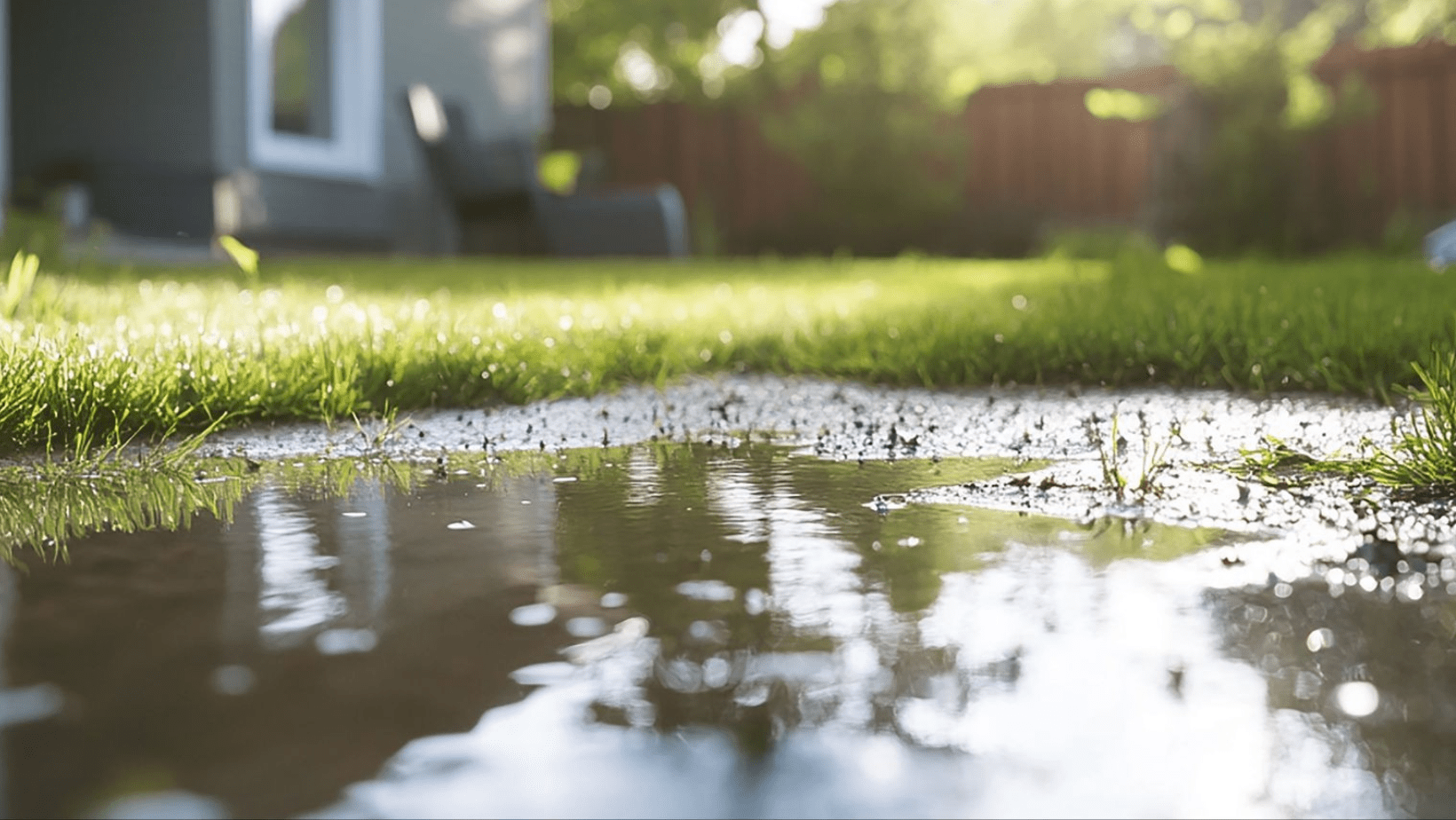
Summer in Middle Tennessee brings longer days, lush landscapes, and more opportunities to enjoy your outdoor living spaces. It also brings sudden downpours and severe thunderstorms that can overwhelm even well-maintained properties. Flash flooding, soil erosion, and drainage issues are some of the most common problems homeowners face during Nashville’s storm season.
A beautiful landscape is about more than appearance. It should also be designed to perform well during changing weather conditions. At Landscape Solutions, we create outdoor environments that balance aesthetics with long-term functionality. Proper drainage, grading, and thoughtful landscape design help protect your investment while preserving the beauty of your property for years to come.
If you’ve noticed standing water, washed-out planting beds, or erosion after heavy rainfall, it may be time to look beyond temporary fixes and address the underlying cause.
Why Summer Storms Create Bigger Landscape Problems
Middle Tennessee’s rolling terrain and clay-heavy soils can make properties especially vulnerable during periods of intense rainfall. Water that cannot properly soak into the ground or flow away from the home often finds the path of least resistance, creating erosion, damaging hardscapes, and stressing plant material.
Common problems caused by summer storms include:
- Soil washing away from planting beds
- Standing water near patios and walkways
- Mulch displacement
- Lawn erosion on slopes
- Water collecting near foundations
- Damage to retaining walls and hardscape features
While these issues may seem minor after a single storm, repeated exposure can gradually weaken the performance of the entire landscape.
How Soil Erosion Impacts Your Landscape
Soil erosion is one of the most overlooked threats to long-term landscape health. Every heavy rainstorm can remove small amounts of topsoil, but over time those losses become much more significant.
Healthy topsoil provides nutrients, supports root systems, and helps plants retain moisture during hot summer months. As erosion continues, landscapes often become less stable and more difficult to maintain.
Signs of erosion may include:
- Exposed plant roots
- Gullies forming in sloped areas
- Bare patches where grass no longer grows
- Mulch consistently washing away
- Uneven planting beds
- Sediment collecting near driveways or sidewalks
Once erosion begins, simply replacing mulch or adding more soil rarely solves the problem. The underlying drainage and grading conditions typically need to be addressed.
Why Proper Grading Makes All the Difference
Many drainage problems begin with improper grading. Even small elevation changes can determine whether water flows safely away from the home or collects where it shouldn’t.
A properly graded landscape helps direct runoff while protecting both the landscape and the home’s foundation.
Good grading can help:
- Move water away from structures
- Reduce standing water
- Minimize soil erosion
- Protect hardscape installations
- Improve overall drainage performance
- Support healthier plant growth
As part of our landscape design process, we evaluate how water naturally moves across each property before recommending design solutions. Every site is different, and successful drainage planning should reflect the unique characteristics of the land.
Drainage Solutions That Protect Your Investment
Effective drainage is rarely accomplished with a single solution. Instead, multiple landscape elements work together to manage water efficiently during heavy storms.
Depending on the property’s conditions, drainage improvements may include:
- Strategic grading adjustments
- Drainage swales
- Proper downspout management
- Retaining walls that help stabilize slopes
- Permeable landscape areas
- Carefully planned planting zones
These features work together to slow, redirect, and manage stormwater before it creates damage.
Rather than simply reacting to drainage problems after every storm, proactive planning creates a landscape that continues performing even during periods of heavy rainfall.
Choosing Plants That Help Reduce Erosion
Plant selection plays an important role in controlling erosion naturally. Well-established root systems help stabilize soil while improving water absorption throughout the landscape.
Thoughtful planting strategies often include:
- Deep-rooted native plants
- Ornamental grasses
- Layered shrub plantings
- Groundcovers for sloped areas
- Trees positioned to improve soil stability
- Climate-adapted plant selections
Beyond helping control erosion, these plantings also contribute to a healthier, more resilient landscape that requires less intervention over time.
Choosing plants suited to Middle Tennessee conditions allows the landscape to better withstand seasonal weather extremes while maintaining its visual appeal.
Protecting Hardscapes During Heavy Rainfall
Patios, walkways, retaining walls, and other hardscape features are significant investments. Without proper drainage planning, stormwater can gradually undermine the soil supporting these structures.
Some warning signs that hardscapes may be affected include:
- Pavers beginning to shift
- Uneven walkways
- Cracking surfaces
- Water pooling on patios
- Retaining wall movement
- Soil washing out around stone edges
Protecting these features starts long before installation. Proper base preparation, grading, and drainage planning help ensure hardscape elements remain stable through years of changing weather conditions.
When we design outdoor living spaces, we consider how every patio, walkway, and gathering area interacts with surrounding drainage systems and planting beds. This integrated approach creates outdoor environments that are both beautiful and durable.
When Temporary Fixes Are No Longer Enough
Many homeowners initially respond to drainage issues by adding more mulch, filling low spots with soil, or making small adjustments after each storm. While these efforts may improve appearance temporarily, they often fail to resolve the underlying cause.
You may benefit from a more comprehensive landscape evaluation if you notice:
- Recurring erosion after every heavy rain
- Persistent standing water
- Repeated mulch replacement
- Plants declining in overly wet areas
- Hardscape settling or movement
- Drainage issues becoming more severe each season
These recurring problems often indicate that the landscape’s grading, drainage infrastructure, or overall design needs to be reevaluated.
A comprehensive landscape installation or renovation can improve both the beauty and long-term performance of your property while helping prevent future storm damage.
Build a Landscape That Performs in Every Season
Summer storms are part of life in Middle Tennessee, but recurring flooding and erosion should not be. A thoughtfully designed landscape can manage water effectively, protect valuable outdoor features, and remain beautiful throughout changing weather conditions.
At Landscape Solutions, we believe exceptional landscapes should do more than create curb appeal. They should perform reliably season after season while supporting the way you live and enjoy your property. By combining expert grading, drainage planning, hardscape design, and carefully selected plantings, we help homeowners create outdoor spaces that are built to last.
If your property has experienced flooding, erosion, or drainage problems during Nashville’s summer storms, now is the perfect time to address the root cause. Talk with Landscape Solutions about creating a landscape that protects your investment while enhancing the beauty, functionality, and long-term value of your home.