
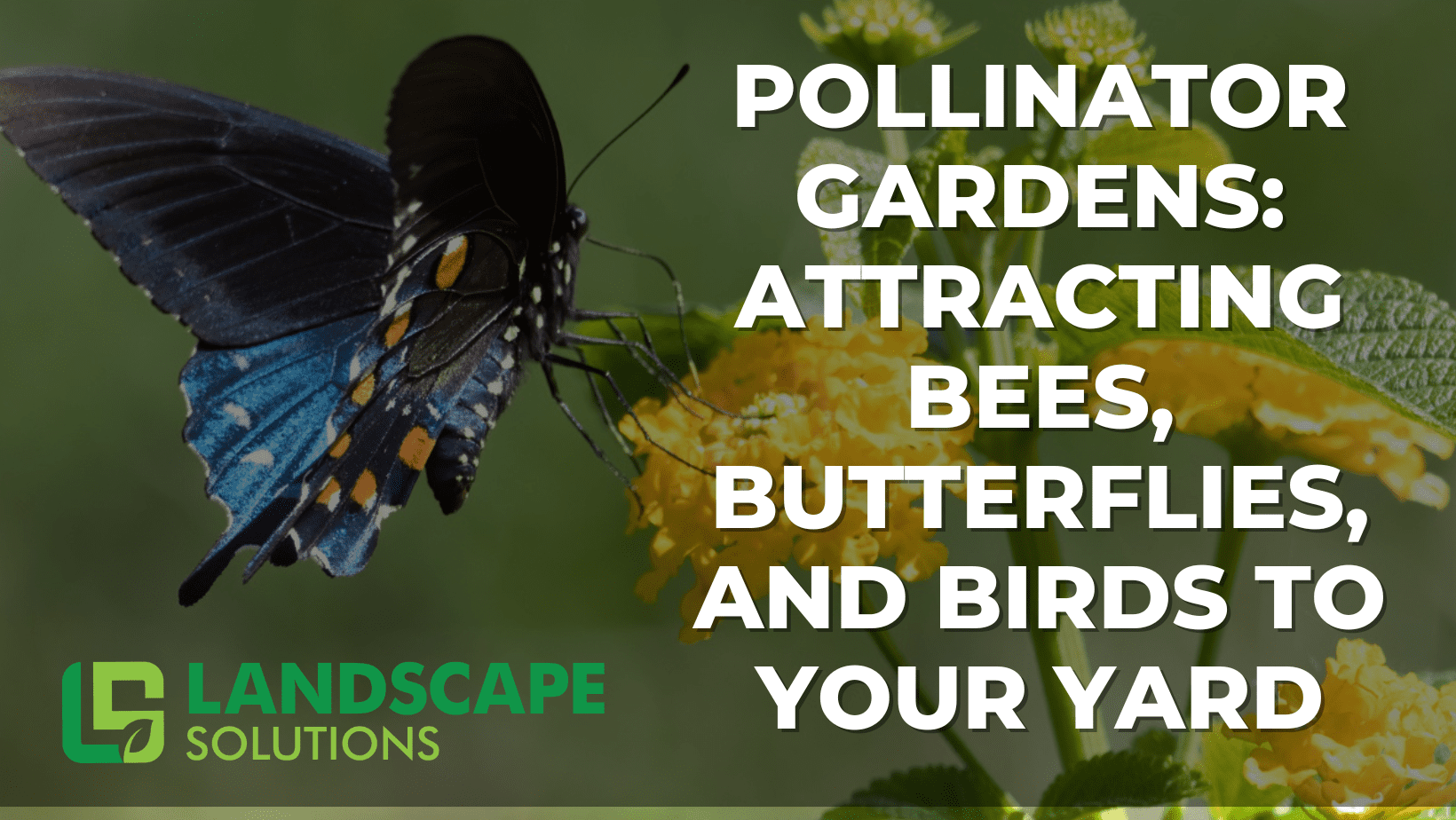
Butterflies, bees, and birds bring beauty and excitement to your garden and play a crucial role in the life cycle of many plants. The simple act of pollination, facilitated by these colorful creatures, ensures the production of seeds and fruits, contributing to more substantial and healthier crops. In this blog, we will explore the significance of pollinator gardens in supporting local ecosystems and how Landscape Solutions can assist you in creating a vibrant pollinator habitat.
Choosing Pollinator Plants
To attract and support pollinators, the right plant selection is key. Pollinators have diverse needs, and your plant choices can anticipate and fulfill these needs. Bees, for instance, require both pollen and nectar, while hummingbirds and butterflies primarily seek nectar. Here are some considerations for choosing pollinator-friendly plants:
Types of Flowers
– Bees: Plants like Monarda (bee balm), coneflowers, black-eyed Susans, asters, and zinnias are rich sources of both pollen and nectar.
– Butterflies: Bright, vivid colors, especially red, yellow, and purple, attract butterflies. Flowers with flat, open blooms and short nectar tubes, such as coneflowers, are ideal.
– Hummingbirds: Tubular, trumpet-shaped blooms like honeysuckle and lobelia are favorites. They are attracted to red, orange, and white-colored flowers.
Native Plants
Including native plants in your garden is crucial for supporting local wildlife. Native insects have special relationships with native plants, fostering a healthy ecosystem. Landscape Solutions can guide you in selecting region-specific native plants that cater to local pollinators.
Planning and Planting Your Garden
The success of a pollinator garden lies in thoughtful planning and planting. Here are essential tips:
Sun and Wind Exposure
Choose a sunny spot with direct sunlight for your pollinator garden. Be mindful of harsh winds, especially for butterflies, which prefer sheltered feeding and resting spots.
Staggered Blooming
Ensure your garden has plants that bloom at different times throughout the year, providing a continuous food source for pollinators. Plant flowers with staggered bloom periods to support pollinators throughout the seasons.
Group Planting
Plant in groups of three to five instead of singles. This helps pollinators forage more efficiently, conserving energy. Varying plant heights creates layers, offering safety and shelter.
Nourishment
Use high-quality plant food like Pennington UltraGreen All Purpose Plant Food 10-10-10 to nourish your plants. Healthy plants produce more blooms, fruits, and vegetables, ensuring a more attractive and productive garden.
Diversity
Mix annuals, perennials, and edibles to provide diversity for pollinators. A variety of plants attracts non-pollinating songbirds and other wildlife. As blooms fade, seeds become a food source, contributing to the overall health of your garden.
Adding Inviting Elements
Apart from the right plants, consider incorporating additional elements to make your garden even more inviting for pollinators:
Water Sources
– Drinking: Provide shallow water sources like birdbaths or saucers for drinking.
– Bathing: Install a bubbling fountain or gently moving water for pollinators to bathe, which is especially beneficial for sticky nectar gatherers like hummingbirds.
Resting Spots
– Sun-Drenched Stones: Create areas with sun-drenched stones or pebbles for butterflies to rest and recharge.
– Bare Soil Patches: Allow for bare, unmulched soil patches for ground-nesting bees.
Shelters
– Butterfly Boxes, Bird Houses: Install shelters like butterfly boxes, bird houses, or insect boxes for cavity-nesting pollinators.
– Bird Feeders: Supplement the natural food sources with bird feeders for nectar and seeds.
By incorporating these elements, your garden transforms from a feeding spot to a welcoming home for pollinators. Consider keeping a garden journal to track changes and preferences of different pollinator species over the years.
Using Pest Controls Responsibly
While sharing your garden with pollinators, occasional pest issues may arise. When using pest controls, minimizing their impact on beneficial insects is crucial. Follow these responsible pest control tips:
– Identify Good vs. Bad Bugs: Learn to distinguish between beneficial and harmful insects before implementing treatments.
– Use Trusted Pest Control Products: Choose trusted products that work by contact and don’t penetrate plant tissue.
– Target Specific Pests: Focus on specific insect pests and affected plants. Precision spot treatments with products like Sevin® Insect Killer Ready to Use are effective.
Apply pesticides in the early evening when pollinators are less active. Avoid spraying open blooms, and take precautions to prevent drift. Responsible pest control ensures a healthy balance in your garden, supporting both plants and pollinators.
Creating a pollinator garden is a rewarding endeavor that not only adds beauty to your outdoor space but also contributes to the well-being of local ecosystems. Landscape Solutions is here to guide you through the process, from selecting the right plants to designing a garden that attracts and sustains pollinators. Transform your yard into a haven for bees, butterflies, and birds by contacting Landscape Solutions today at (615) 852-5009 or visiting our website. Let’s work together to create a vibrant pollinator habitat that enhances the ecological richness of your surroundings.