
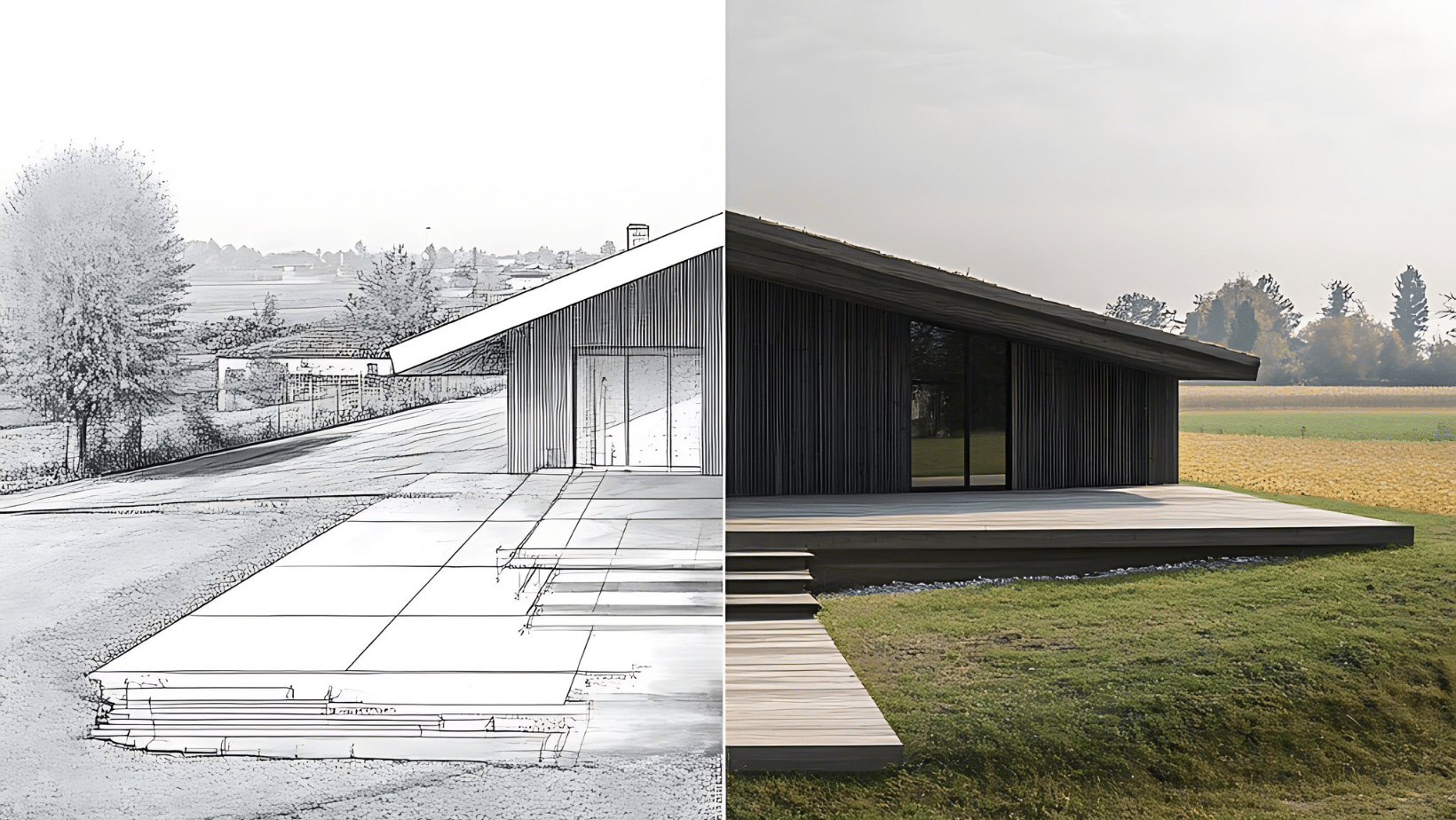
When you’re investing in a major landscape project, the design is only the beginning.
A beautiful landscape plan can completely change the way you see your property. It can show you how an outdoor kitchen might connect to a patio, where planting beds could create privacy, or how a pool and garden spaces could work together. But once the plan is finished, someone still has to turn those ideas into a finished landscape.
That is where the difference between design-only and design-build becomes important.
Both approaches can produce beautiful results, but they involve very different processes. Design-only separates the planning and construction phases, while design-build brings them together under one team.
For homeowners in Nashville, Brentwood, Franklin, and throughout Middle Tennessee, understanding that difference can make it easier to choose the right approach for your property, budget, timeline, and long-term goals.
What Is Landscape Design-Only?
With a design-only approach, the landscape design and construction are handled separately.
A landscape designer or architect develops the plans for the property, and once those plans are complete, the homeowner typically works with a separate contractor or landscaping company to handle construction and installation.
The design itself may include planting plans, hardscape layouts, outdoor living concepts, grading information, lighting plans, or other details depending on the scope of the project.
This approach can work well for homeowners who already have a trusted contractor or who prefer to manage the construction process themselves.
However, it also means the homeowner becomes the connection between the design and construction teams.
That can create additional steps during a project, particularly when questions or changes come up during construction.
What Is Design-Build Landscaping?
Design-build combines landscape design and construction into one coordinated process.
Instead of developing a plan with one company and then handing it to another contractor, the same team is involved from the initial concept through construction.
At Landscape Solutions, our Landscape Design services are built around understanding the property, the homeowner’s lifestyle, and the goals for the outdoor space before developing a plan.
From there, our Landscape Construction services allow us to take that design from the planning stage into the physical landscape.
That continuity can make a significant difference.
The people developing the design understand how it is intended to work, while the construction team has direct access to the people who developed the plan.
Instead of asking two separate companies to interpret the same vision, the project stays connected from beginning to end.
Design Consistency From Concept to Completion
One of the biggest advantages of a design-build approach is consistency.
A landscape plan may look straightforward on paper, but outdoor construction rarely happens in a perfectly predictable environment.
Once excavation begins, existing site conditions can reveal challenges that were not obvious during the initial planning process. Drainage, grading, tree roots, soil conditions, utilities, and existing structures can all influence how a project needs to be executed.
When the design and construction teams work together, adjustments can be evaluated within the context of the original vision.
That helps protect the design intent while allowing the project to respond to real conditions on the property.
The goal isn’t to follow a plan blindly. It’s to understand why the plan was created and make thoughtful decisions when the site requires adjustments.
Better Communication Throughout the Project
Large landscape projects involve a lot of moving parts.
Depending on the project, you may be coordinating planting, hardscapes, outdoor living spaces, pools, lighting, drainage, grading, and custom features.
When multiple companies are involved, communication between those parties becomes another responsibility for the homeowner.
A design-build company can simplify that process by keeping those conversations within one team.
You have a clearer point of contact, and the people involved in construction have a direct connection to the design process.
That can help reduce misunderstandings and keep everyone working toward the same outcome.
For homeowners who are already managing work, family, and everything else that comes with maintaining a property, having fewer moving pieces can be a significant benefit.
Design-Build Can Help With Complex Outdoor Spaces
The larger and more integrated a landscape project becomes, the more valuable coordination can be.
Consider a backyard renovation that includes:
- A new outdoor kitchen
- A large patio or entertaining area
- A pool and spa
- New planting beds
- Landscape lighting
- Privacy plantings
- Drainage improvements
- Walkways connecting different areas of the property
Each component needs to work on its own, but it also needs to work with everything around it.
The location of a tree can affect a patio. Grading can affect drainage. Drainage can affect planting areas. Lighting needs to complement both the landscape and architecture. An outdoor kitchen needs to be positioned around how the homeowner actually uses the space.
That is where an integrated design approach becomes particularly valuable.
Our Outdoor Living Design services can help homeowners think about these relationships before construction begins, rather than solving them one at a time after work is already underway.
Design-Only May Still Make Sense in Certain Situations
Design-build isn’t automatically the right choice for every homeowner.
There are situations where a design-only approach can be a good fit.
For example, you may already have a contractor you trust and want to provide them with a professionally developed landscape plan. Or perhaps you’re planning to complete the project in phases and want to establish the overall vision before deciding exactly when and how each part will be constructed.
A comprehensive design can also provide value even if construction does not happen immediately.
Our design services include options such as a Planting Plan, Partial Property Plan, or Master Plan, depending on how much of the property you want to address.
The important thing is understanding what you need from the design.
If your primary goal is to create a roadmap for future improvements, design-only may be exactly what you need.
If you want someone to take that roadmap and manage the process of turning it into a finished landscape, design-build may provide a more seamless experience.
The Construction Team Can Influence the Design
One advantage of having construction experience within the same company is that the design team can think about constructability from the beginning.
A design shouldn’t only look good.
It needs to work on the actual property.
Materials need to be appropriate for the application. Grades need to make sense. Plant selections need to account for growing conditions. Outdoor spaces need to be practical to build and maintain.
This is especially important in Middle Tennessee, where properties can present challenges involving slopes, heavy rainfall, drainage, clay soils, mature trees, and changing site conditions.
A design-build team can approach the project with those realities in mind.
That doesn’t mean limiting creativity.
In many cases, it allows the creative vision to become more realistic and better integrated with the property.
How Design-Build Can Simplify Budget Conversations
Budget is another major consideration.
With separate design and construction companies, homeowners may receive a design first and then discover that bringing the entire vision to life costs significantly more than expected.
That can lead to redesigning portions of the project, changing materials, removing features, or going back through the planning process.
A design-build approach can provide more opportunities to consider the relationship between design decisions and construction from the beginning.
That doesn’t mean every project will come in at a predetermined price or that unexpected site conditions won’t arise.
It means the design and construction conversations can happen together.
For homeowners making a significant investment in their property, that connection can make the planning process more informed.
Design-Build Can Create a More Cohesive Finished Landscape
A landscape should feel like one environment rather than a collection of unrelated projects.
This is particularly important for high-end properties where the landscape needs to complement the architecture, surrounding property, and way the homeowners use the space.
Plantings should work with hardscape. Lighting should enhance the architecture and landscape. Outdoor living areas should connect naturally to the house and garden.
Even functional elements such as drainage can be incorporated without feeling like an afterthought.
Our Landscape Construction services include outdoor living, pools and spas, hardscapes, custom features, gardens and plantings, native plantings, lighting, and drainage solutions.
Having these capabilities connected to the design process allows the different pieces of a project to be considered together.
What About Native and Ecological Landscape Design?
For homeowners interested in native or adaptive plantings, the design-build relationship can be especially useful.
Plant selection isn’t simply about finding something that looks good in a rendering.
The plants need to make sense for the property’s conditions, including sunlight, soil, moisture, drainage, and available space.
Our Native Plant Design approach considers regionally appropriate plants and how they fit into the overall landscape.
Those plantings can then become part of a larger construction and installation plan rather than being treated as an isolated design element.
The result can be a landscape that feels more natural while still providing the structure, refinement, and visual impact expected from a professionally designed property.
Which Approach Is Better for a Nashville Landscape?
There isn’t one answer that applies to every project.
The better question is which process makes the most sense for what you are trying to accomplish.
Design-only may be the right fit if:
- You already have a trusted contractor.
- You primarily need a professional landscape plan.
- You want to phase construction over time.
- You prefer to manage the construction process yourself.
- You are still developing your long-term vision.
Design-build may be the better fit if:
- You want one team managing the project from concept through construction.
- Your project involves multiple landscape elements.
- You want better continuity between design and construction.
- You prefer having a single point of contact.
- You want construction considerations incorporated into the design process.
- You are investing in a comprehensive landscape transformation.
For larger residential projects, the ability to connect all of these pieces can make the overall experience much more straightforward.
The Right Process Depends on the Property
Every property is different.
A small planting project doesn’t necessarily require the same process as a complete backyard transformation. A simple landscape refresh is different from designing an outdoor living environment that includes a pool, kitchen, multiple gathering spaces, custom features, lighting, and extensive planting.
That’s why we don’t believe in forcing every homeowner into the same approach.
The right starting point is understanding the property and what you want the finished landscape to accomplish.
From there, we can determine whether a focused design plan, a larger master plan, construction services, or a complete design-build process makes the most sense.
Start With the End Result in Mind
The biggest difference between design-only and design-build isn’t simply who draws the plans or who installs the landscape.
It is how the entire project is connected.
A landscape design should consider how people will actually use the space. Construction should respect the original design intent. Plantings, hardscapes, outdoor living spaces, lighting, drainage, and other elements should feel like parts of the same landscape.
When those pieces are considered together, the finished result has a better opportunity to feel intentional rather than pieced together over time.
At Landscape Solutions, we approach landscape projects with that long-term perspective.
We design outdoor spaces around the property, the people who use them, and the way they are expected to perform over time. Whether that means developing a planting plan or creating a complete outdoor environment, the goal is always the same: thoughtful design that works in the real world.
Ready to Plan Your Landscape Project?
If you’re considering a landscape project in Nashville, Brentwood, Franklin, College Grove, or elsewhere in Middle Tennessee, the first step is understanding what your property actually needs.
You may only need a professional design. You may be ready for construction. Or you may benefit most from having one team guide the project from the initial concept through completion.
Landscape Solutions provides both Landscape Design and Landscape Construction, giving homeowners the flexibility to choose the approach that best fits their project.
If you’re ready to turn your ideas into a landscape that feels intentional, functional, and built to last, contact Landscape Solutions to start the conversation.